

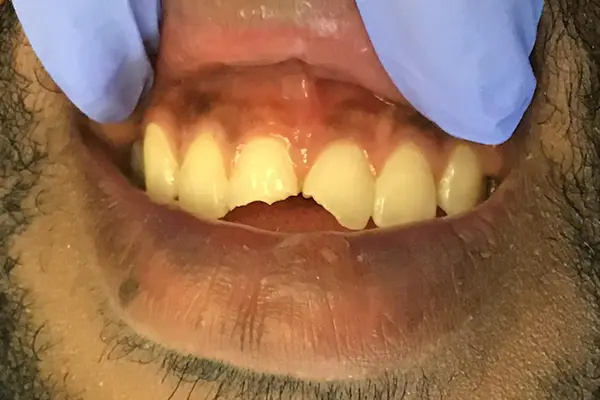
A cracked tooth is a broken tooth. Typical cracked tooth symptoms can include discomfort when biting on something or experiencing temperature changes like drinking hot or cold drinks. Cracks are not always visible to the eye, especially if it is under the gum line, it is also important to note that cracks are not always picked up on routine X-rays.
If you think you might have a cracked tooth and you’re looking for an emergency dentist in Croydon, keep reading!
In this blog, we’ll explore causes, types and signs of a cracked tooth, expert advice on what to do for a cracked tooth until you see a dentist, and how to contact Mayfield Dental, your trusted 24-hour emergency South Croydon dentist, to explore your quick and comfortable solutions.
how do teeth crack?
The most common cause of a cracked tooth is biting and chewing on hard food like bones, fruits stones, pizza crusts, popcorn, ice and nuts.
6 common cracked tooth causes include:
- Tooth decay: when bacteria attacks tooth enamel causing holes (cavities)
- Teeth grinding: causing a lot of pressure
- Large fillings and old amalgam silver fillings: which no longer support the tooth
- Trauma: blows to the face causing damage
- Ageing: with age, people are more prone to cracked teeth
- Changes in temperature in the mouth: e.g. eating something hot and then drinking ice water
How to spot cracked tooth symptoms
Cracked tooth symptoms can be difficult to recognise, but most people experience discomfort when biting on something or experiencing temperature changes like drinking hot or cold drinks. Molars (larger teeth) are more prone to cracks because they ‘’do the most hard work’’ whilst chewing.
Usually, pain from a cracked tooth is not consistent like the pain experienced when there is a hole in the tooth (cavity).
If your cracked tooth is causing pain…
our trusted South Croydon Emergency dentist at Mayfield Dental is able to investigate further to identify the problem before it worsens. They are also accessible for same day and 24 hour dental emergencies if you’re in nearby areas such West Wickham and Shirley with free parking spaces available.
What are the different types of cracks in teeth?
There are various types of tooth cracks which can affect the teeth in different ways:
- Fine lines on the enamel of the tooth which do not cause any pain and do not usually need treatment.
- Minor chips may not need a lot of treatment – if the chip is small the dentist may be able to polish and smooth the tooth down.
- Fractures usually happen adjacent to a filling, and it is often recommended to renew the filling or place a crown on the tooth to give the tooth better support.
- Vertical cracks that haven’t yet reached the root may be salvable, but if the crack goes deep into the tooth, extraction may be the only option.
Can a cracked tooth be fixed?
Most cracks in teeth can be repaired but it is really dependent on the depth and location of the crack. Unlike our bones, a tooth crack does not “heal” on its own so you should get a dentist to look at it to prevent the crack from spreading. The fix for cracked teeth usually comes in one or more of the following:
- Composite Bonding
- Veneer
- Onlay or Dental Crown
- Root Canal Treatment
- Tooth extraction (if the tooth cannot be saved)
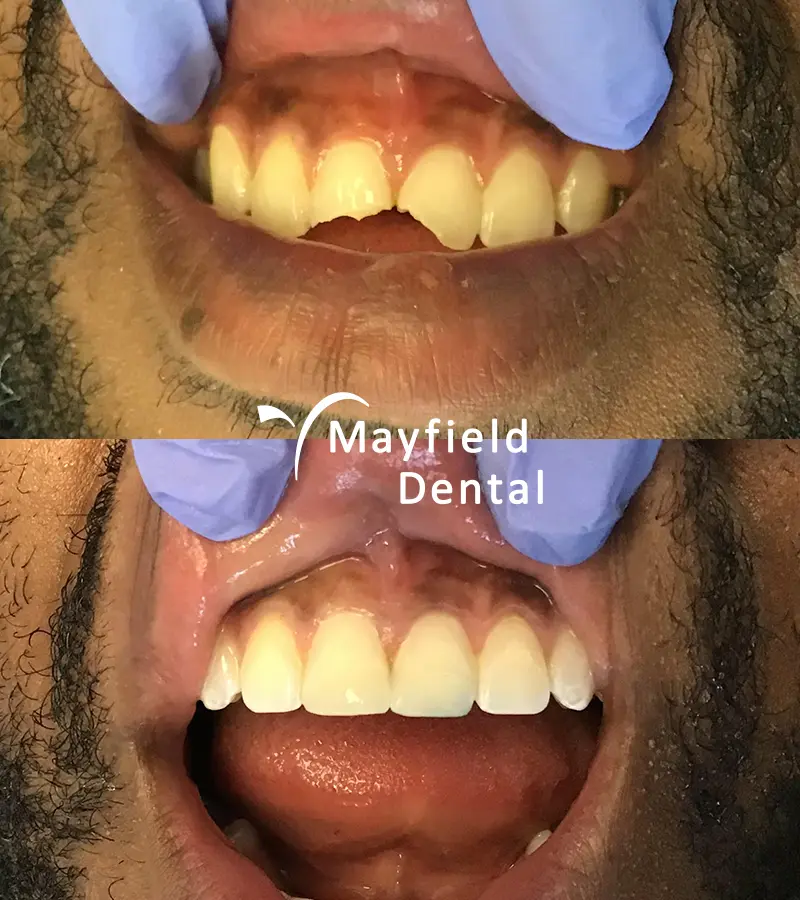
Before and after composite bonding to repair a cracked tooth
How long before a cracked tooth becomes infected?
This depends entirely on how deep the crack is as not all cracked teeth get infected. The crack in your tooth facilitates bacteria to bypass your outer protective enamel to the inside the tooth where the nerve/pulp lies. If the nerve gets involved, then an infection can develop from within a few days to several months. Cracked tooth syndrome has the following symptoms: throbbing pain, extreme sensitivity, pain on biting or a bump/swelling on the gum.
If the crack has affected the nerve within the tooth, root canal treatment may be recommended, followed by a filling or a crown.
Root canal may not always solve tooth symptoms, leaving the only option of extraction.
Cracks will never fully heal but treatment suggested may prolong the life of the tooth for many years to come.
Should I still brush a broken tooth?
Yes you should still brush your broken or cracked tooth as keeping the area clean is essential to avoid an infection. You need to brush it gently without putting pressure on the broken area, to avoid causing pain or further damage. Carefully floss the tooth either side of the break. You can use salt water rinses to help soothe any gum irritation around the tooth crack.
However you should not brush your broken tooth if part of the tooth is very loose, or if brushing causes throbbing pain or bleeding. In this case arrange for an emergency appointment with your dentist to discuss the next steps.
What to do for a cracked tooth until visiting a dentist?
You can never fully prevent teeth from cracking, but you can try taking some precautions, such as:
- Wear a mouth guard if you grind your teeth (especially at night).
- Avoid biting on and chewing hard food (nuts, bones, crackling, pizza crusts, popcorn kernels).
- Strong teeth are less prone to crack so take care of your oral hygiene – brush twice a day, floss daily and visit your local Croydon dentist for regular check-ups, hygiene cleans and fluoride applications as recommend by your dentist.
- If recommended by the dentist use Duraphat toothpaste to strengthen your teeth by obtaining daily extra fluoride.
What not to do with a cracked tooth?
Firstly, don’t delay visiting your dentist as the crack can develop every time you bite down.
If you suspect a cracked tooth do not test your tooth by poking it with your tongue or biting down to see if it hurts.If there is a crack each time you bite down, the tooth flexes allowing the crack to open some more, allowing more bacteria into the tooth and increasing the risk of a full-on vertical tooth crack.
We recommend that you avoid the following food and drinks:
- Crunchy/hard foods: these can wedge and split the tooth further. e.g. nuts, hard boiled sweets, ice crunching, and crusty bread
- Extremes of temperature: hot and cold as the inside of the tooth can be exposed this can make temperature changes very painful.
- Sticky foods: caramel and gummy sweets.
Acidic food and drinks: lemons and vinegars. These can be more irritating to the nerve within the tooth.
Don’t use self-repair “tooth filling repair” kits – as these do not provide the clamping strength to hold a tooth together. Also, if there are bacteria within the crack, they can become trapped, increasing the chances of developing an infection.
visit our same or next day emergency dentist
If you think you may have a cracked tooth and need seeing as soon as possible, give us a call at Mayfield Dental on 020 8657 1291 or alternatively…

Dr. Deepali Patel
Principal dentist at Mayfield Dental
BDS (Lond) 2006 | GDC No. 103927
related articles
Dental Emergencies
Experiencing unmanageable pain or tooth damage? Whether you need a same day appointment or be seen within 24 hours we’re here to help.
Urgent Dental Care
Tooth extraction
A straightforward procedure, followed by aftercare that includes rest and gentle care of the extraction site.
About Tooth Extractions
Root Canal Treatment
A tooth-saving treatment to relieve pain, clean out infection and preserve your natural teeth effectively.
Save My Tooth