

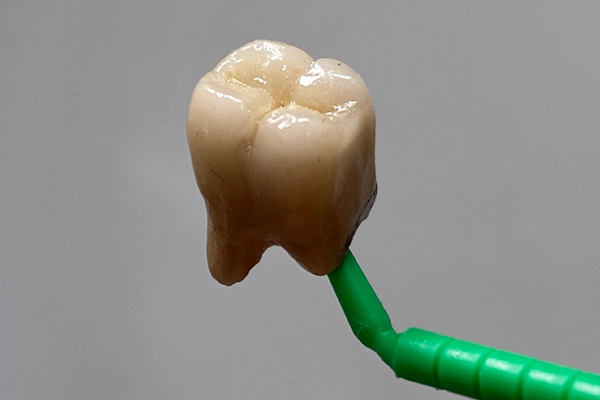
At Mayfield Dental, we want our patients to have all the facts. This quick guide answers what happens if you delay getting a crown and the most frequently asked questions about why crowns are recommended after root canal treatment.
What will happen if you don’t get a crown after a root canal?
Delaying your crown after a root canal procedure can lead to several serious and costly problems:
- High Fracture Risk: The treated tooth becomes increasingly brittle. Even a tiny vertical crack can render the tooth completely un-restorable.
- Reinfection: Temporary fillings degrade quickly, and routine composite fillings can leak over time. This allows bacteria to re-enter the root system, causing a secondary infection.
- Tooth Loss: Once a tooth fractures below the gum line, it cannot be saved, and extraction becomes the only option.
- Increased Cost: Re-treating a failed root canal or replacing a lost tooth with a dental implant is significantly more expensive than getting a crown placed promptly.
FAQs: Root Canals and Dental Crowns
How long will a root canal last without a crown?
Without a crown, a root canal-treated tooth will typically last anywhere from a few months to a couple of years, though some might survive longer depending on the tooth’s location and original condition.Most dentists recommend placing a crown within a few weeks to protect the treated tooth from breaking or becoming reinfected.
If your dentist has recommended a crown, it is best to get it placed within 1 to 6 months of completing your root canal. This timeframe allows any inflammation in the surrounding gum tissues to settle while ensuring the tooth remains strong and sealed.
Why do dentists push for crowns after root canals?
It can sometimes feel like a sales pitch when a dentist insists on a crown right after you’ve already paid for a root canal. However, they are simply trying to protect the investment you just made in your oral health.
Here is why a crown is clinically necessary:
- The tooth is internally hollowed out: To access and clean the infected or inflamed nerve tissue, the centre of the tooth must be drilled, leaving a weakened outer shell.
- The tooth becomes brittle: Once the tooth’s blood supply is removed during the root canal, it dries out over time and becomes much more fragile.
- Heavy biting pressure: Your jaw muscles exert immense vertical and sideways pressure when you chew. A crown acts like a protective band around the tooth, supporting it against these forces.
- A superior bacterial seal: Root canals mainly fail when bacteria from the mouth leak back into the root filling. A crown provides a much better long-term seal than a standard filling, as it doesn’t expand, contract, or wear down over time.
Note: Dentists generally don’t push for crowns on front teeth after a root canal, provided the tooth is still mostly intact, because front teeth experience significantly less biting pressure.
Can I just get a filling instead of a crown?
For back teeth (molars and premolars), a filling is rarely enough. These teeth absorb the brunt of your chewing force and are highly likely to fracture after a root canal, which frequently results in a total extraction. Therefore, back teeth almost always require a crown.
For front teeth (incisors), which experience less vertical pressure, a standard composite filling may be sufficient if there is enough natural tooth structure left.
Can I eat normally after a root canal without a crown?
In short: no. You should not eat normally or chew on a treated back tooth until it is fully protected by a permanent crown. Hard, crunchy, or chewy foods dramatically increase the risk of the tooth fracturing.
While you wait for your permanent crown, follow these rules:
- Chew on the opposite side of your mouth to avoid putting direct pressure on the tooth.
- Avoid hard, crunchy, and sticky foods (like nuts, crusty bread, ice, or chewy sweets) that could break the tooth or pull out your temporary filling.
View our aftercare guide for more advice on root canal aftercare
High-Quality Crowns at Mayfield Dental
A dental crown completes your treatment by restoring both the strength and appearance of your tooth. At Mayfield Dental, our crowns are crafted from durable, high-quality materials:
- Porcelain and Ceramic Crowns: These are meticulously matched to your natural tooth shade for a seamless, lifelike look.
- Metal and Gold Alloys: These provide exceptional, long-lasting strength for back molars that endure heavy chewing forces.
Even if your tooth feels completely fine after your root canal, it still requires long-term protection to function safely for years to come.
Need to book your dental crown appointment in croydon?
Whether you’re considering options to have a dental crown fitted at our South Croydon clinic after a recent root canal, or have questions about your treatment plan, contact the team at Mayfield Dental today to secure your smile.

Dr. Deepali Patel
Principal dentist at Mayfield Dental
BDS (Lond) 2006 | GDC No. 103927
related articles
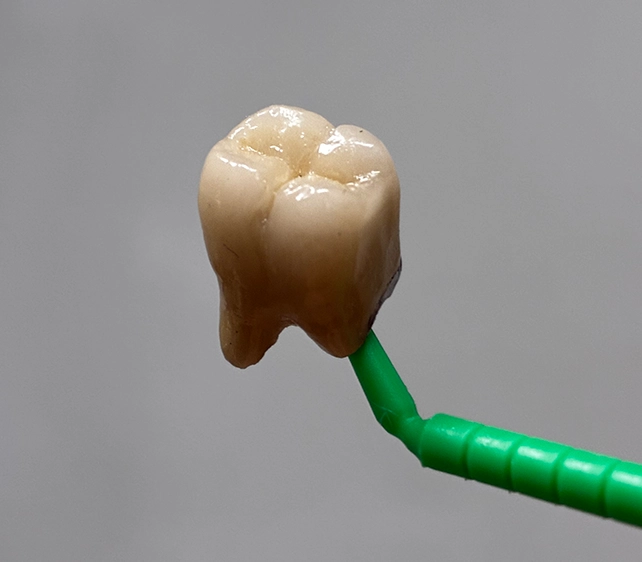
Dental Crowns
Protect and restore the strength and appearance of your tooth with durable, high-quality crowns.
Permanent Crowns
Root Canal Treatment
A tooth-saving treatment to relieve pain, clean out infection and preserve your natural teeth effectively.
About Root Canals
Dental Hygiene
Schedule a classic hygiene teeth cleaning to remove plaque and tartar for healthier teeth and stronger gums
Clean, Scale & Polish