

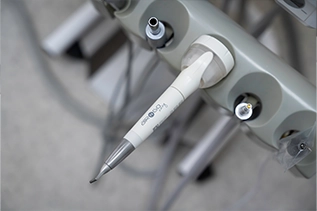
While a gentle technique, air polishing (airflow dental cleaning) removes stains from the surface of teeth, as well as trapped food debris and plaque build-up from between the teeth.
Having clean teeth is very important to our health and plays a big part in the way we look and feel about ourselves, as well as how others look at us. Regular visits to the dental hygienist either for a traditional hygiene scale and polish or the newer faster, gentler, effective air polishing treatments are essential to maintain healthy teeth and gums. The majority of our patients at Mayfield Dental visit us for regular air polishing teeth cleans on a 3-6 monthly basis to keep their gums at optimum health.
Is scaling & air polishing better than a standard scale & polish?
While scaling is essential for removing the hard tartar (calculus) that causes bone loss, Air-Flow provides the “detailing” by removing stubborn stains and soft bacteria. At Mayfield Dental, this combination is a patient favourite for several reasons:
- Superior Stain Removal: If you enjoy red wine, tea, or coffee, Air-Flow removes these stains much more effectively and gently than a traditional rotating rubber cup and gritty paste.
- Effective Biofilm Removal: It clears away Biofilm—the invisible, sticky layer of bacteria—more thoroughly than scaling alone. This biofilm is often the main culprit behind bad breath and bleeding gums.
- Kind to Restorations: If you have dental implants, crowns, or veneers, Air-Flow is significantly gentler on these surfaces than metal instruments, eliminating the risk of microscopic scratches.
- No “Gritty” Aftertaste: Traditional polishing uses a thick, sandy paste. Air-Flow feels much cleaner, involving only a fine mist that leaves the mouth feeling instantly refreshed.
The Verdict: If you want your teeth to feel the cleanest and look the brightest while minimising the discomfort of heavy scraping, adding AirFlow (air polishing) to your routine is the superior choice. However, a scale is still required first to remove the hard deposits that a pressurised spray cannot move.
Is Air Polishing teeth Safe?
Yes, air polishing is widely considered very safe and is actually gentler on your teeth than traditional scaling methods.
Why air polishing is a safer choice:
- Non-abrasive: It avoids the physical friction of metal tools, meaning there is less risk of discomfort or damage to crowns, veneers, and implants.
- Reduced Sensitivity: Because there is minimal physical contact from scraping tools, the process is far more comfortable for those with sensitive teeth.
- Kind to Gums: The pressurised spray is much gentler on your soft tissues than manual instruments.
Important Safety Considerations
While safe for most, please let your clinician know if you have any of the following, as we may need to take extra precautions:
- Respiratory Conditions: Such as asthma or COPD, as the fine mist can occasionally cause irritation.
- Active Infections: If you have open sores or wounds in the mouth, it is best to wait until these have fully healed.
- Medical Conditions: If you have Addison’s disease, Cushing’s disease, high blood pressure, or kidney issues, please inform us. Some polishing powders contain sodium which can affect electrolyte balance or salt restrictions.
Check with your air polishing Hygienist
Ask your dentist or hygienist and they will able to confirm if air polishing is suitable for you. This is especially important for you if you have sensitive teeth or are receiving dental treatments that could make a standard clean or a deeper scale and polish more difficult, particularly in the case for braces and fixed retainers.
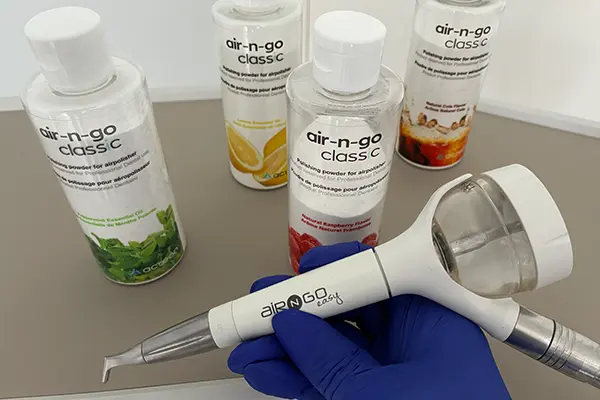
air polishing teeth procedure
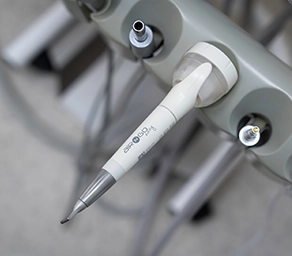
We use a specialised hand-piece that emits a controlled “jet” of three components:
- Compressed Air: The propellant.
- Water: To keep the tooth surface cool and hydrated.
- Fine Powder: Specially formulated fine powder designed to remove stains and bacteria gently.
Unlike traditional tools, this hand-piece doesn’t rotate or vibrate. The jet reaches deep into the tight gaps between teeth; where stubborn stains often hide from a traditional scale and polish, and moves slightly under the gum line with gentle precision.
What does it feel like? You will feel a cool, pressurised spray on your teeth and gums. Most of our patients describe it as a refreshing “tickling” or “massage” sensation rather than a dental cleaning!
Does air polishing whiten teeth?
Not exactly. While air polish dental cleaning removes deep surface stains to reveal your teeth’s natural brightness (often making them look 1–2 shades lighter instantly), it doesn’t change the internal colour of your teeth like professional whitening gels do. It is, however, the perfect “prep” treatment before starting a professional whitening course.
Not exactly. While air polish dental cleaning removes deep surface stains to reveal your teeth’s natural brightness (often making them look 1–2 shades lighter instantly), it doesn’t change the internal colour of your teeth like professional whitening gels do. It is, however, the perfect “prep” treatment before starting a professional whitening course.
Why Air Polishing is Essential for orthodontic Braces & Fixed Retainers
If you are wearing a permanent brace to help straighten your teeth, it can be difficult to reach all of your teeth with a toothbrush. Cleaning around brackets, wires, and retainers with traditional scaling tools is notoriously difficult, making air polishing the most effective hygiene tool for these patients. Some of the benefits include:
- A “360-Degree” Clean Fixed brackets and retainers create “dead zones” where a toothbrush simply cannot reach. The pressurised spray swirls around wires and behind brackets, flushing out food particles and the bacteria that cause “white spots” (decalcification) if allowed to build up.
- Protecting Your High-Risk Zones Fixed retainers are known for rapid tartar build-up, turning the area into a high-risk zone for gum disease. Air polishing reaches deep under the bonded wires and into the interdental gaps, flushing out soft plaque before it hardens into tartar.
- Safe for Your Appliances Brackets and retainers are attached to your teeth using composite adhesive “nuggets.” While manual scraping with metal tools can sometimes stress or weaken these bonds, air polishing cleans effectively while preserving the integrity of the glue holding your appliance in place.
- Preventing Gum Recession If you have a fixed retainer, we recommend a hygiene appointment every 4 to 6 months. Because these wires are permanent, the plaque that collects around them is a leading cause of localised gum recession in adults.
Does AirFlow hurt with braces?
No, most people with braces and fixed retainers find AirFlow to be significantly more comfortable than traditional scaling. Because there is minimal to no scraping against the teeth or brackets, there is less sensitivity and pressure. The treatment uses a gentle “hissing” sound rather than high-pitched vibrations (great for nervous patients) and involves no poking for those with inflamed gums. It’s a much kinder way to clear the plaque build-up that often occurs during orthodontic treatment.
Book your air polish teeth clean appointment
Contact our dental team in South Croydon today to arrange your air polishing hygiene treatment. If you are a nervous patient or just want to know more about our dental hygiene options please call us on 020 8657 1291

Dr. Deepali Patel
Principal dentist at Mayfield Dental
BDS (Lond) 2006 | GDC No. 103927
related articles

Dental Hygiene
Schedule a classic hygiene teeth cleaning to remove plaque and tartar for healthier teeth and stronger gums.
Clean, Scale & Polish
Air Polishing
We offer a similar air polishing treatment to Airflow using advanced alternative technology to gently remove stains and biofilm.
Gentle Stain Removal
Dental Check ups
Dental check ups alert you to any potential concerns that might be developing, which we can help prevent becoming long-term issues.
Oral Health Check